Window Leak Water Damage in Brendonwood: Storm Intrusion Help
The wind shifts, the rain goes sideways, and suddenly you hear that quiet drip you were hoping you had imagined. A storm rolls through Brendonwood, and by the time you walk into the living room, the drywall under the window is darker than it was an hour ago, the sill is puddled, and the carpet beneath has that cold, heavy feel that tells you water has been moving for a while. Window leaks during severe weather are one of the most underestimated sources of water damage we respond to at Brendonwood Water Restoration, partly because the entry point looks small and partly because most of the damage hides inside the wall cavity where you cannot see it yet.
We have been handling storm intrusion calls across central Brendonwood since 2018, and the pattern is almost always the same. The homeowner mops up what they can see, sets a towel on the sill, and goes to bed thinking the worst is over. Two days later the paint starts bubbling, the trim cups, and a musty smell creeps in. By week two, mold is colonizing the back of the drywall. This guide walks you through what is actually happening behind that window, what you should do in the first few hours, and when it makes sense to call a certified team rather than ride it out with fans from the garage.
Storm driven window leaks rarely come from the glass itself. The water finds its way in through failed caulk lines, deteriorated glazing, a cracked sill nose, missing head flashing above the frame, or wind driven rain that gets pushed up under the siding and lands inside the rough opening. Once that water is inside the wall, it does not behave the way homeowners expect. It runs along the bottom plate of the framing, soaks the insulation, wicks up into the drywall paper, and pools on top of whatever vapor barrier or subfloor sits below. You see a six inch wet spot under the window, and the actual saturation footprint is two or three feet wide inside the cavity. That is why moisture meter readings on a wall that looks dry can still come back at 30 percent or higher.
The IICRC, which is the certifying body our technicians train under, classifies this kind of intrusion as Category 1 water at the point of entry, since rainwater starts out clean. The catch is that Category 1 only stays Category 1 for about 24 to 48 hours. After that, contact with building materials, dust, drywall paper, and any organic debris inside the wall starts pushing it toward Category 2, which is grey water and carries a meaningful microbial load. Wait a few more days in a warm Brendonwood home and you are looking at Category 3 conditions with active mold growth, which is a much more expensive and disruptive remediation. Time is the single biggest variable that decides whether your repair costs 1,200 dollars or 12,000.
What To Do In The First Few Hours
Your first move is safety. If the storm is still active, stay away from the window itself, especially if the glass is compromised or if power lines are down outside. Once it is safe, pull back any curtains or blinds so the area can breathe, lift wet rugs off hardwood or laminate so you do not get secondary staining, and move furniture at least three feet away from the wet wall. Take photos before you touch anything else, because your insurance adjuster will want to see the original state of the damage. Sop up standing water with towels, but resist the urge to start tearing out trim or cutting drywall yourself. A clean inspection cut by a restoration technician preserves the evidence your claim depends on, and a ragged DIY hole sometimes gives the carrier a reason to push back.
Next, address the source. A tarp over the exterior of the window, a piece of plastic sheeting taped to the inside frame, or a temporary patch on damaged siding can buy you the hours you need before professionals arrive. If your roof took a beating in the same storm and you suspect the leak is actually coming from higher up and running down to the window header, that is a different conversation, and our notes on attic water damage and roof leak restoration walk through how to tell the difference. Storm season in Brendonwood tends to bring layered problems, and assuming the obvious entry point is the only entry point is how homeowners miss a second leak two rooms over. Check the windows on the leeward side of the house too, since wind direction during the storm matters more than which window happens to be closest to the visible damage.
When To Call Brendonwood Water Restoration
If the wall under your window is still wet 24 hours after the storm passed, if you smell anything musty, or if the drywall is soft to the touch, that is the moment to pick up the phone. Brendonwood Water Restoration answers calls 24 hours a day in Brendonwood, arrives with calibrated moisture meters and commercial drying equipment, and documents everything your insurance carrier will ask for. We are BBB A+ rated, IICRC certified, and locally owned, and we treat your home like the investment it is. Call us for a free inspection and we will tell you what we find, straight.
Why Hidden Moisture Is The Real Enemy
When Brendonwood Water Restoration arrives, the first thing our technicians do is map moisture. We use pin and pinless meters on the drywall, thermal imaging to spot temperature differentials inside the wall cavity, and in some cases a borescope through a small inspection hole to look at the insulation directly. The reason for all of that diagnostic work is simple. If we dry only what looks wet, we leave 40 percent of the moisture behind, and that hidden saturation is what becomes mold three weeks later. For a deeper look at how this plays out inside finished walls, our write up on water damage behind walls and hidden leak detection covers the meters and methods in plain language.
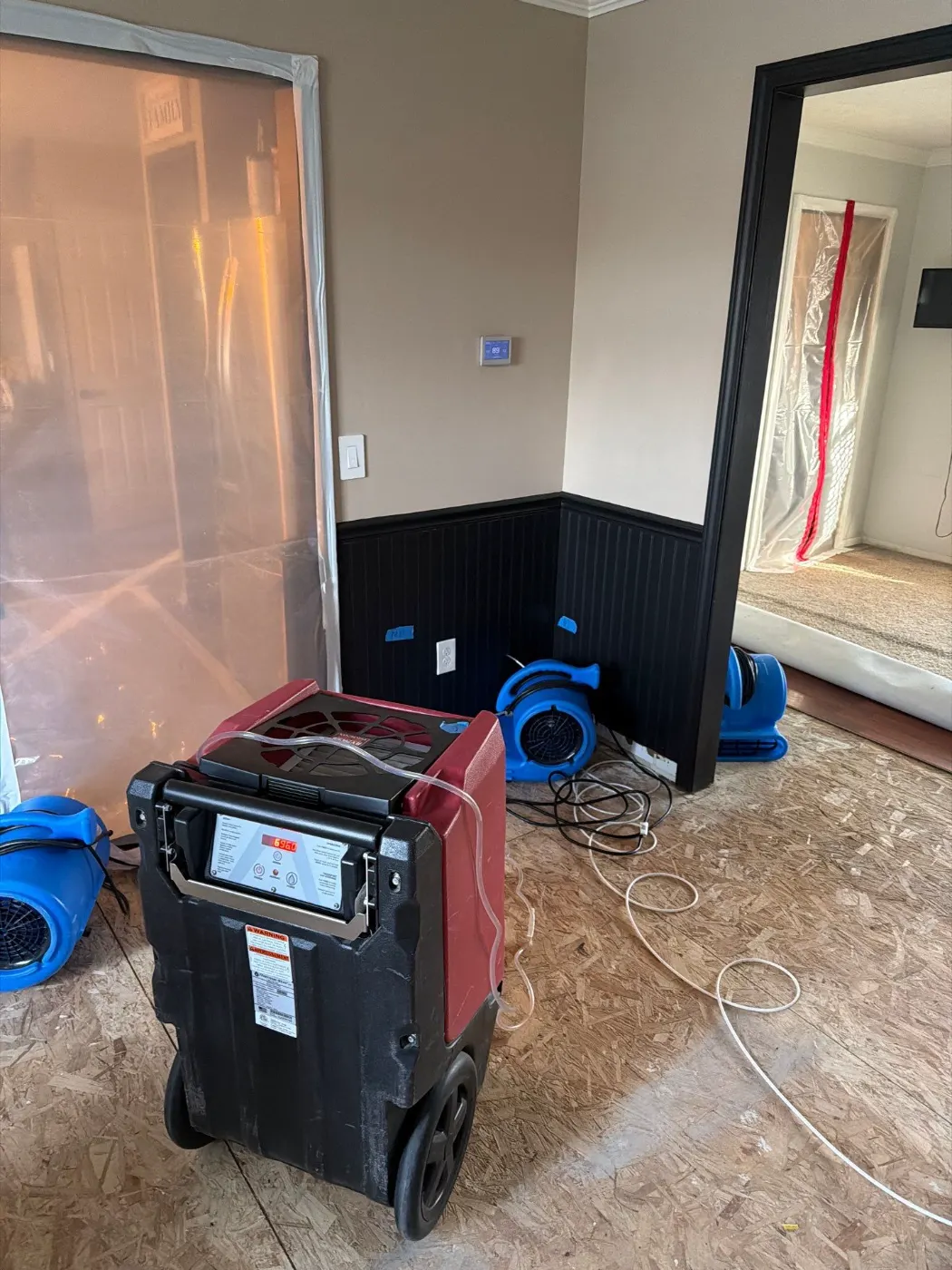
Drying a window leak properly usually means pulling baseboard, drilling weep holes in the bottom plate cavity, removing a strip of saturated insulation, and setting up a containment with air movers and a dehumidifier sized to the cubic footage of the room. A typical single window intrusion in a Brendonwood home dries in three to five days when caught early. We monitor daily, log readings, and only pull equipment once the materials hit dry standard, which is usually within four percentage points of an unaffected reference wall. If drywall has been wet longer than 72 hours, or if the paper face is delaminating, we recommend flood cuts rather than in place drying because the math on mold risk stops working in your favor. Fiberglass insulation that has been compressed by water loses most of its R-value even after it dries, so replacing that strip is not optional if you want the wall to perform the way it did before the storm.
Insurance, Cost, And What To Expect
Most homeowner policies cover sudden and accidental water damage from a storm, including wind driven rain that enters through a damaged window or compromised flashing. What they typically exclude is long term seepage, deferred maintenance, and flood from rising surface water, which requires separate flood insurance. Document the storm date, save any weather reports, and file the claim quickly. Our team writes estimates in Xactimate, the same software adjusters use, which keeps the conversation grounded in line items rather than guesswork. A straightforward window intrusion mitigation runs roughly 1,500 to 4,500 dollars in the Brendonwood market, and full reconstruction with new drywall, paint, trim, and flooring repair can push the total to 6,000 to 12,000 depending on finish level. If your situation is more involved and you want a sense of the broader picture, our breakdown of water damage restoration cost walks through every line item we typically see.
One detail that often surprises homeowners is that the actual window replacement, if the unit itself failed, usually falls outside the water mitigation scope and gets handled by a glazier or general contractor on a separate line of the claim. We coordinate with those trades so the sequencing makes sense, since drying has to finish before the new window goes in, and the new window has to be flashed correctly before any interior reconstruction starts. Skipping that order is how people end up paying twice for the same wall.
If we look at your situation and decide the damage is cosmetic enough that you can handle it with a box fan and a dehumidifier from the hardware store, we will tell you that directly. We would rather give you honest guidance than sell you a job you do not need, and a five minute phone call with Brendonwood Water Restoration after a storm often saves a homeowner from a much harder week down the road.
Frequently Asked Questions
Does homeowners insurance cover window leaks from storms in Brendonwood?
Most policies cover sudden storm-driven window leaks under the sudden-and-accidental clause, especially when wind damage is documented. Chronic leaks from failed caulk or aging windows are typically denied as maintenance. Brendonwood Water Restoration helps Brendonwood homeowners build the documentation file (moisture maps, photos, IICRC scope) that supports a clean claim.
How fast do I need to act after a window leak?
The IICRC S500 standard treats 48 to 72 hours as the threshold before Category 1 water shifts to Category 2 and microbial growth begins. In Brendonwood humidity, we often see that window compress to 36 hours. Same-day extraction and drying is the most cost-effective move.
Can you tell how far the water spread without opening walls?
Yes. Brendonwood Water Restoration uses thermal imaging and pin and pinless moisture meters to map saturation through finished surfaces. We only open walls when readings confirm cavity moisture, which keeps demolition targeted and your repair costs lower.
What does window leak restoration typically cost in Brendonwood?
Minor cases run $750 to $1,800, moderate cases $2,400 to $5,800, and major cases $6,500 to $14,000. Severe multi-room intrusion can exceed $15,000. The category of water and how long it sat are the two biggest cost drivers.
Will mold definitely grow after a window leak?
Not always, but the risk climbs sharply after 48 hours of cavity moisture above 16 percent. If your leak is dried professionally within the first two days and treated with antimicrobial, mold is usually preventable. After that window, remediation often becomes part of the scope.
Have a restoration question?
Our IICRC certified Brendonwood crew is ready to help. Free assessments, written scopes, no pressure.